- calendar_today September 3, 2025
That Cozy Mystery You Read by the Fire? It Might’ve Had Some Help
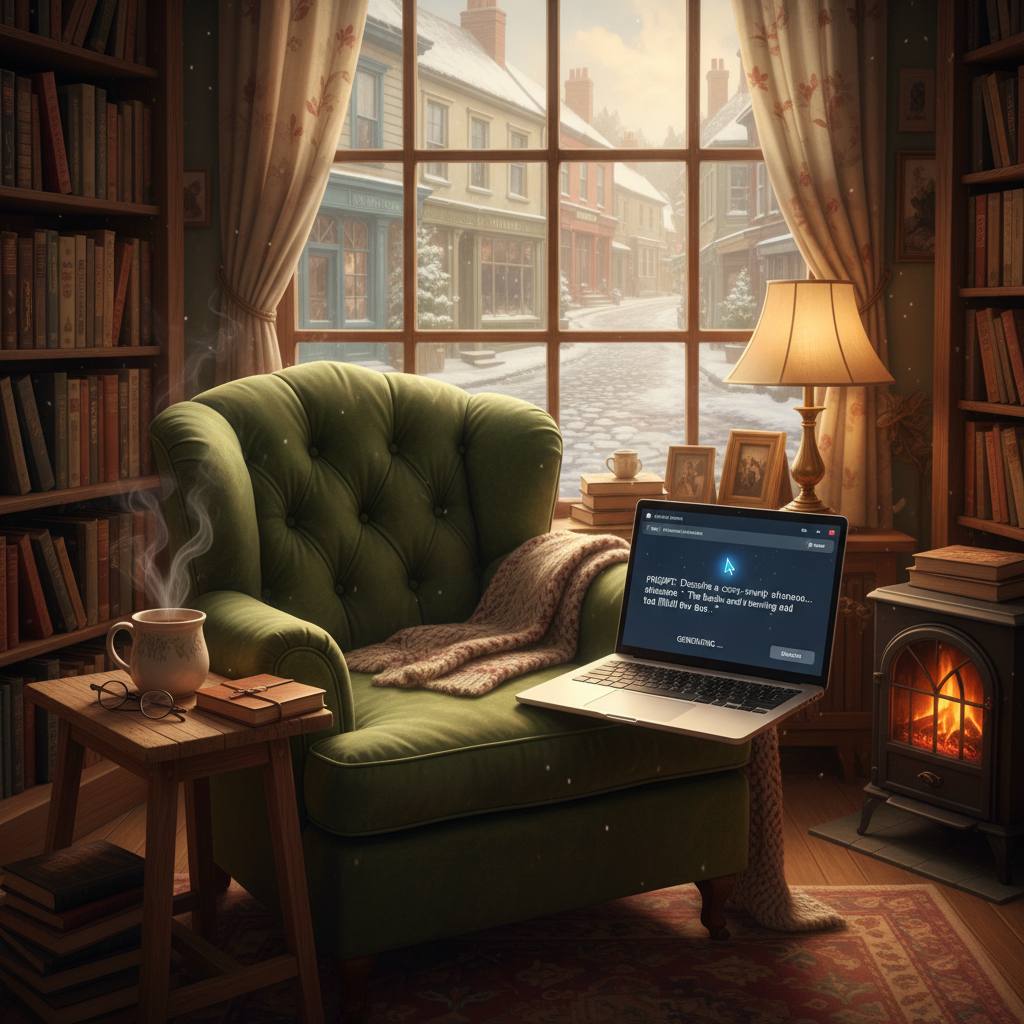
There’s something about a good book in Wisconsin—especially when the wind’s howling outside, your mug is full of something warm, and your feet are tucked under a blanket you’ve had since college. We live for those moments. And lately, more and more of those page-turners people are getting lost in? They’re written with the help of AI.
Seriously.
Imagine finishing a sweet small-town romance or a thrilling whodunit, feeling that familiar book hangover—and then realizing it was created, at least in part, by a machine. It’s happening more than folks think. And here in Wisconsin, where we still check out library books with our kids and swap paperbacks at deer camp, it’s kind of blowing our minds.
Writers in Wisconsin Are Getting Smart (and a Little Scrappy)
Not everyone here is trying to hit the New York Times list. Some just want to finally finish that novel that’s been sitting in a folder since 2016. And now? They’ve got help.
Writers across the state—from Eau Claire to Green Bay to Milwaukee—are using AI tools like ChatGPT, Sudowrite, and Claude to get unstuck, speed things up, or just brainstorm when the ideas won’t flow.
They’re teachers, nurses, stay-at-home parents, retirees. They’re folks with full-time jobs and part-time dreams. And they’re not trying to fake it. They’re using AI like a writing buddy who’s always there when the kids are asleep and the coffee’s gone cold.
Not Everyone’s Sold, But That’s So Us
If you know anything about Wisconsin, you know we like to talk things out—over fish fry, on back porches, in grocery store aisles. So yeah, people here have feelings about this whole AI-writing thing.
Some are excited. They say it’s the only reason they’ve made real progress. Others? A little wary. “If the machine’s doing the writing,” one local author told me, “then what am I even doing?”
But it’s not really about replacing the writer. It’s about giving them tools they didn’t have before. Like swapping out a rusty shovel for a snowblower. You’re still doing the work. You’re just not breaking your back in the process.
AI Isn’t Perfect, But Sometimes It Gets Pretty Close
Especially in genre fiction. You give AI a framework—murder mystery, holiday romance, second-chance love—and it’ll churn out something that’s surprisingly emotional. Maybe not Pulitzer-worthy, but enough to make someone tear up in their cabin up north or chuckle on the morning bus ride through Madison.
And if we’re being honest? Most readers don’t care how the story got written. They care how it feels.
Here’s What Wisconsin Writers Are Actually Using AI For
People around here are practical. They’re not handing the reins over to robots—they’re using tech where it makes sense:
- Generating plot outlines when your brain’s fried after work
- Finding the right word when it’s on the tip of your tongue
- Fixing stiff dialogue without rewriting the whole scene
- Staying on schedule when life keeps getting in the way
These tools aren’t magic. They’re just helpful. Like writing with a GPS instead of an old paper map.
The Sticky Part? Ownership and Authenticity
We care about originality here. About voice. And that’s where things get complicated.
Legally, books written entirely by AI don’t have traditional copyright protection. That means unless a human’s shaping and editing the story, it doesn’t really “belong” to anyone. And what happens when an AI starts writing in a voice that sounds a little too much like someone famous?
It’s a question we’ll have to face sooner rather than later—especially as more Wisconsin authors publish with a mix of heart and hard code.
But in the End, It’s Still About the Story
Out here, storytelling is in our bones. We pass down family recipes like folklore. We tell fish tales, old ghost stories, and “you won’t believe what happened at the Kwik Trip” sagas. So yeah—maybe AI is part of the mix now. But it doesn’t mean we’re giving up the human part.
Whether the words come from a farmhouse in La Crosse, a third-floor apartment in Milwaukee, or a line of code trained to “sound Midwest,” the heartbeat of the story still matters. And if that story makes someone feel seen, soothed, or just a little less alone on a long snowy night?
Well, we’ll keep reading.