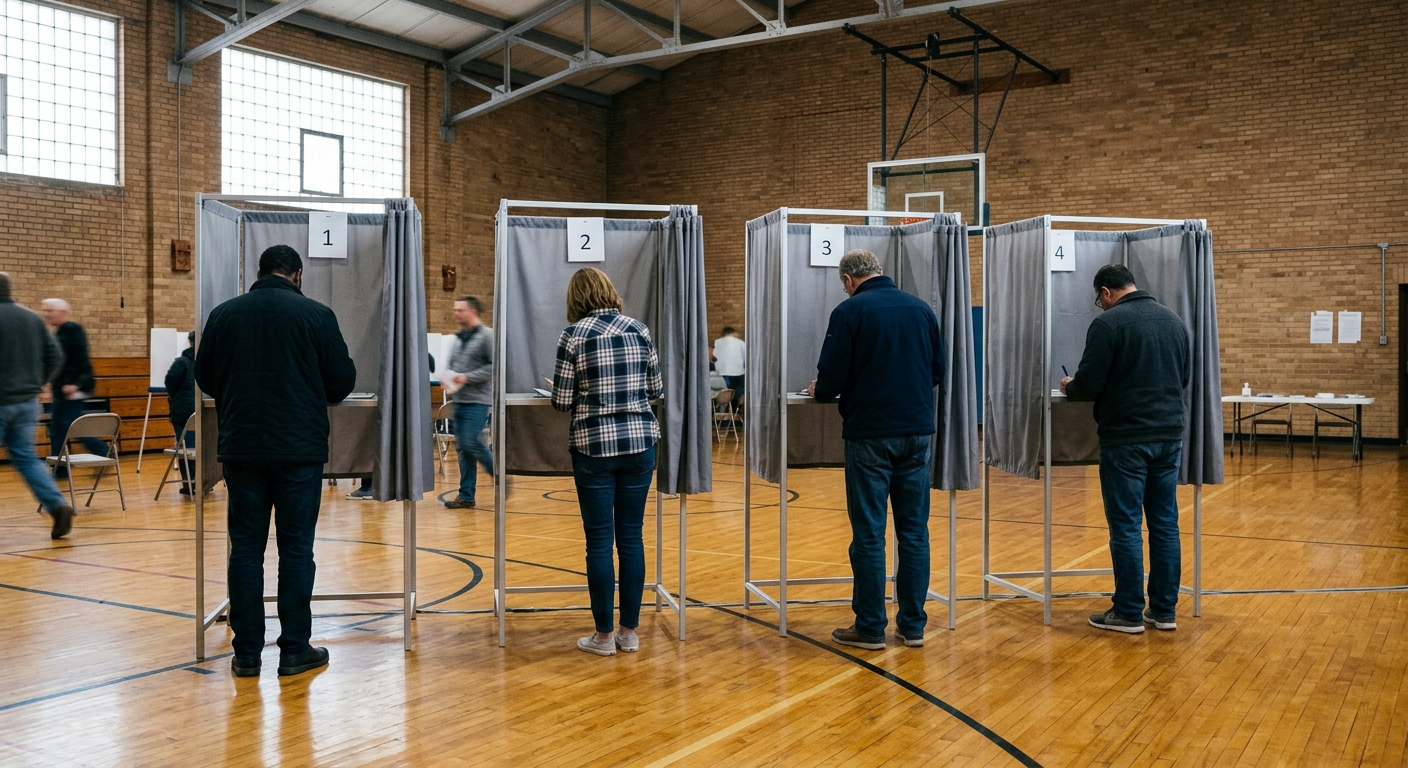
AI-generated illustration; not a photograph of the reported event.
- calendar_today August 8, 2026
The upcoming Wisconsin primary election, set for August 11, 2026, is drawing significant attention across the state as voters prepare to determine nominees for high-profile federal, state, and local offices. As Wisconsin heads to the polls this summer, residents are urged to review key dates, candidates, and updated voting procedures to ensure successful participation in this crucial election cycle.
Democratic Primary to Decide Next Governor Candidate
Among the many competitive contests on the ballot, the Democratic primary for governor stands out, especially following Governor Tony Evers’ announcement that he will not seek a third term. Several prominent governor candidates have launched campaigns, each hoping to secure the party’s nomination and shape Wisconsin’s political landscape. The race has sparked widespread debate within party circles and among the broader electorate, reflecting the ongoing importance of statewide races in shaping the region’s future.
Voter Registration: Deadlines and Requirements
Participating in the Wisconsin primary election requires eligible residents to ensure their voter registration is current. The Wisconsin Elections Commission and local municipal clerks urge voters to verify their registration status promptly, as deadlines vary depending on the method of registration. Online and mail registration deadlines typically fall several weeks ahead of Election Day, while in-person options remain available up to and including primary day at local polling places.
Navigating Absentee Ballot and Early Voting Options
Wisconsin residents have flexibility in how they cast their ballots. For those unable to vote in person on August 11, the state allows absentee ballot requests, with clear timelines to ensure timely submission. Early voting opportunities are also available in many municipalities, offering additional convenience for busy voters. Both options require compliance with established procedures to guarantee every vote is counted accurately in this significant primary contest.
Photo ID Requirements for Voters
Voters participating in the primary must be prepared to meet photo ID requirements at the polls or when submitting an absentee ballot. Accepted identification includes Wisconsin-issued driver’s licenses or identification cards, U.S. passports, or certain other government-issued photo IDs. Election officials emphasize the importance of bringing proper identification to avoid delays or complications at polling locations, a policy designed to maintain the integrity of local elections.
Range of Federal, Statewide, and Local Elections
Beyond the high-profile gubernatorial and Congressional contests, the August ballot features numerous positions, from state legislature openings to local races such as Dane County Sheriff. These local elections are critical in shaping policies on issues that matter most to Wisconsin communities. Stakeholders urge voters to research both statewide races and down-ballot contests, as outcomes will influence everything from education funding to public safety in neighborhoods across the region.
Accessing Election Resources and Assistance
To help voters navigate the process, resources such as MyVote Wisconsin offer accessible information on where, when, and how to vote, as well as details about each race. The Wisconsin Elections Commission provides up-to-date details on polling locations, ballot previews, and a range of election resources. For those needing support, various civic organizations are ready to provide voting assistance, including transportation to polling sites or guidance for new voters. Ensuring every eligible participant can cast an informed ballot remains a top priority in Wisconsin’s election framework.
Engaged and Informed Participation Key for Wisconsin Voters
With an array of competitive primary contests—from the critical Democratic primary for governor to a host of statewide and local races—Wisconsin’s August election underscores the significance of engaged and informed participation. As communities across the region prepare for this milestone event, timely voter registration, attention to absentee and early voting protocols, and utilization of trusted election resources will be vital for a robust turnout and an election that reflects the true voice of Wisconsin’s electorate.