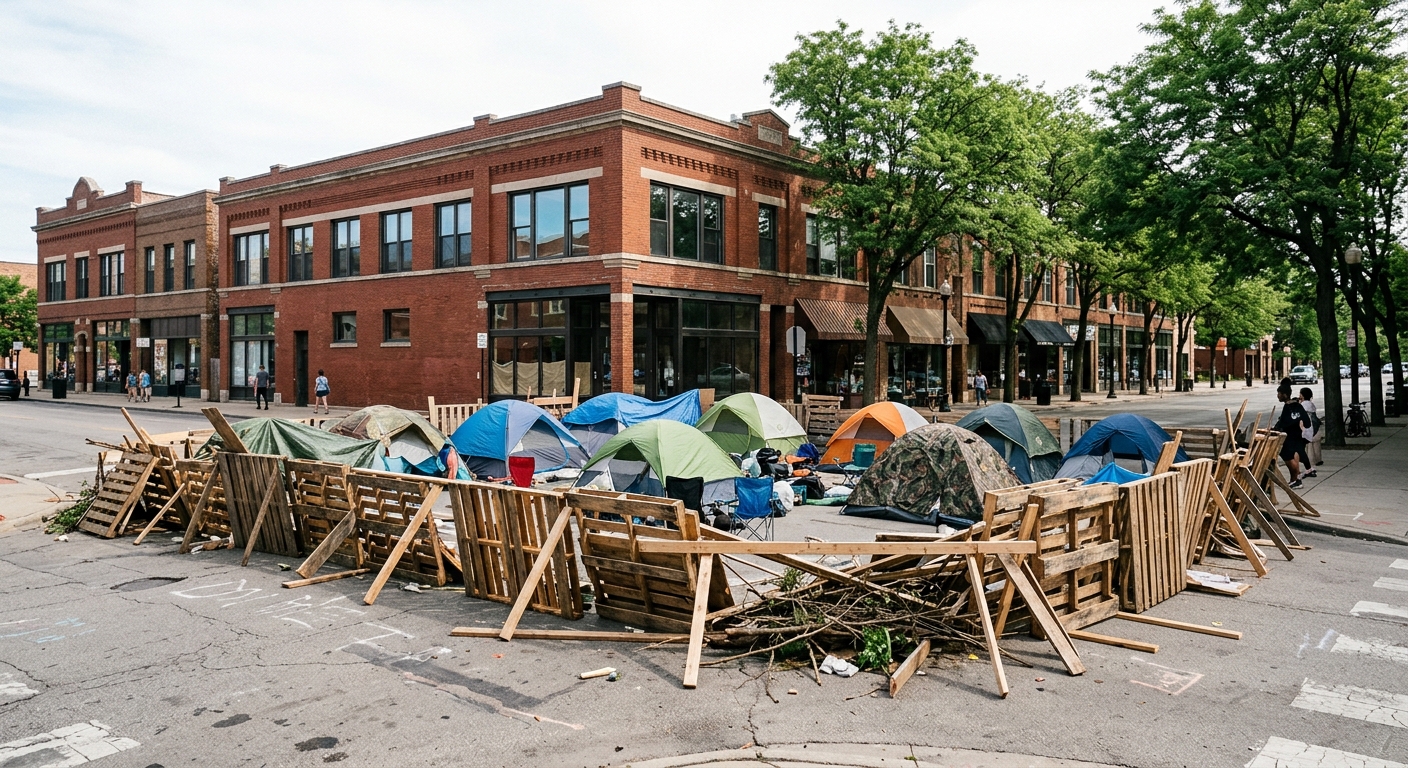
AI-generated illustration; not a photograph of the reported event.
- calendar_today August 2, 2026
The center of Wisconsin’s capital, Madison, continues to feel the impact of the willy street encampment, which has galvanized residents and businesses in recent weeks. Following the July 31 reopening of St. Vinny’s thrift store on Willy Street, which had remained closed for 10 days after a police shooting incident, conversations around public safety, protest, and community health have gained new urgency across the region.
St. Vinny’s Reopens Amid Ongoing Unrest
St. Vinny’s reopening marks a significant milestone for the area, as its affordable shopping options and support of social services are seen as vital to many local residents. The store’s closure followed a shooting and a subsequent protest encampment at a key intersection, which limited vehicle access and contributed to growing tension. Volunteers at St. Vinny’s have expressed relief to resume operations and continue their outreach, emphasizing the role thrift stores play in bolstering Wisconsin’s social services network.
Protests After the Corey Ruiz Incident
The corey ruiz protest has been the driving force behind the presence of the encampment. The fatal police shooting of Corey Ruiz has led demonstrators to erect tents and barricades, with the goal of drawing attention to police accountability and racial justice in Wisconsin. The encampment, while rooted in calls for change, has also brought a surge of public health concerns to the surface, prompting a divided response from neighbors and officials alike.
Local Business Impact Remains Significant
The ongoing protest has directly affected the local business environment. While some shops, including St. Vinny’s, have resumed operations, others remain closed as a result of the blocked roads and associated disruptions. In response to lost revenue, community members have launched fundraisers to assist those most impacted, highlighting both the economic and social services effects of prolonged demonstrations. The local business impact is being closely monitored by business associations and city leaders.
Mayor’s Call and Community Divisions
As the situation has evolved, Madison mayor call Satya Rhodes-Conway has become more vocal, urging the removal of protest barricades to address community safety and traffic concerns. Some residents share the mayor’s stance, citing increased noise complaints, sanitation issues, and difficulties accessing medical or emergency assistance. Others express steadfast support for the protest, emphasizing the need for continued actions addressing systemic inequities. The removal of protest barricades remains a contentious point in municipal discussions.
Volunteer Efforts to Mitigate Disruptions
Encampment leaders and volunteers acknowledge the challenges brought by the demonstration, particularly regarding disruptions to daily life. In response, strategies such as ending loud chanting by 10 p.m. and ensuring that nighttime music is played at a lower volume have been introduced. These volunteer efforts aim to bridge the gap between raising awareness and respecting the needs of the surrounding community, although the encampment now features more tents and fewer volunteers than at its outset. Residents note that despite these measures, noise complaints and feelings of unease persist for some.
Public Health and the Path Forward
Officials point to broader public health concerns arising from limited sanitation, crowded tents, and restricted emergency vehicle access. The balance between upholding residents’ wellbeing and providing space for protest continues to challenge local authorities. In Wisconsin, the willy street encampment has come to symbolize both solidarity and division, as the community debates the appropriate path forward for healing and accountability.
With no immediate resolution in sight, the intersection of activism, commerce, and civic life remains at the forefront, reflecting not only Madison’s struggle but broader themes resonant across Wisconsin. Ongoing dialogue between protesters, business owners, government officials, and residents will shape the evolving landscape on Willy Street in the coming weeks.