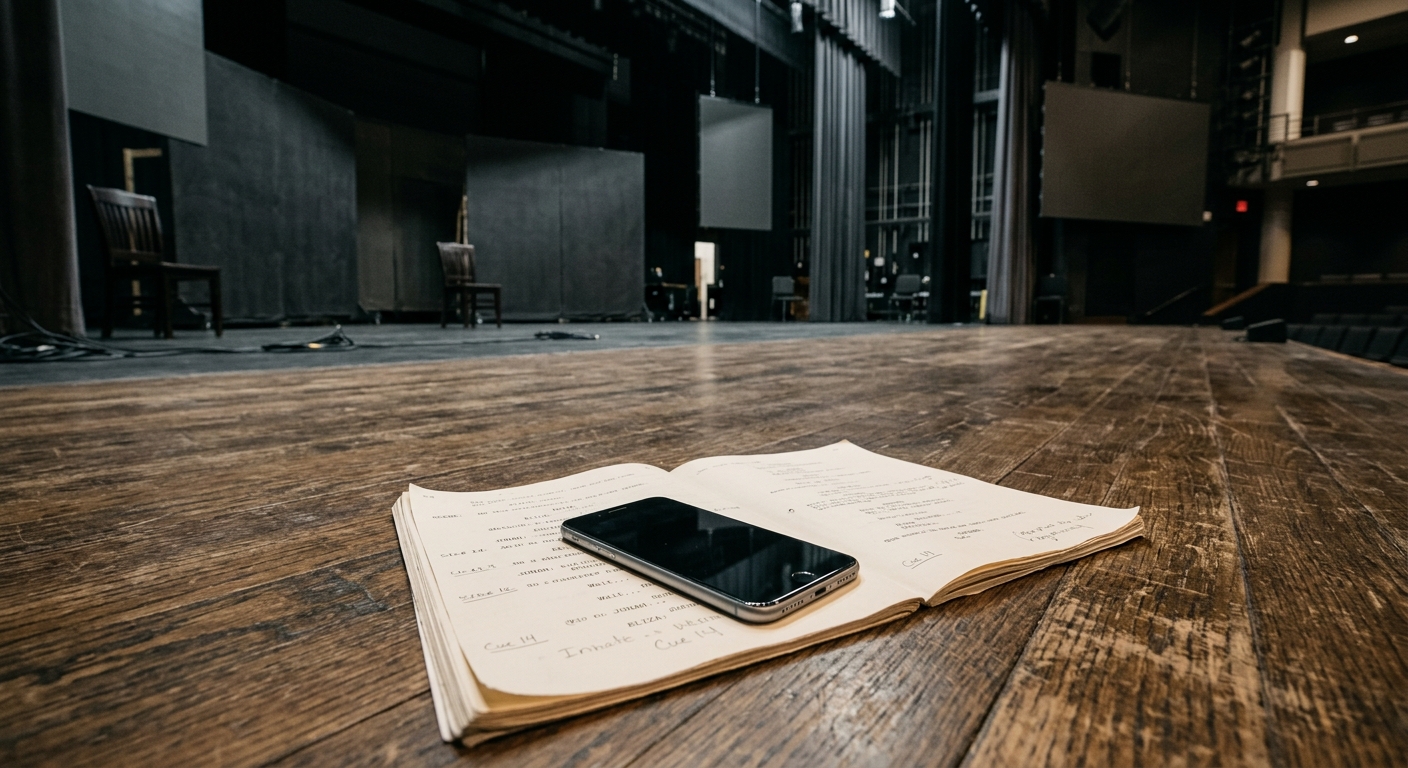
AI-generated illustration; not a photograph of the reported event.
- calendar_today October 20, 2026
A Contemporary Play With a Compelling Premise
UW Theatre’s current production, The Compass, stands out for its inventive approach to storytelling and thought-provoking subject matter. The play, written by Michael Rohd, takes center stage at the University of Wisconsin’s Vilas Hall-Mitchell Theatre through October 25. Blending elements of courtroom drama, interactive play formats, and topical questions about technology's impact on personal responsibility, The Compass offers audiences a unique theatrical experience.
The Central Event: A Trial and an App
At the heart of The Compass is the trial of Marjan (portrayed by Jayda Smith), a 16-year-old student facing prosecution as an adult after she calls in a fake bomb threat to her school. Her actions are motivated not by malice or impulsiveness, but by her reliance on an app called The Compass, which predicts users’ choices. When asked if she would make the call, the app affirms she would, prompting Marjan to follow its guidance.
Marjan’s backstory is layered: she’s a high-achieving student navigating a perilous school environment, distrustful of adults and law enforcement as a young woman of color. Her friend Chaz (Alan Tejeda Montero) appreciates her writing talent, but her dependence on The Compass app dominates her decision-making. This narrative device sets the stage for exploring larger questions of technology responsibility versus personal agency.
Audience Engagement and Interactive Structure
One of the most significant innovations in The Compass is its audience engagement strategy. Throughout the play, proceedings are periodically paused so that eight facilitators can interact with small groups of audience members. These facilitators invite discussion around the main dilemma: how much responsibility should rest on Marjan, and how much on The Compass app?
The facilitators incorporate the audience’s responses into improvised monologues, which are then broadcast on video screens in the style of juror deliberation. Rather than coming across as gimmicky, this interactive play component deepens the immersion and powerfully integrates the thoughts of attendees into the unfolding story.
Artistic Strengths Outshine Script Weaknesses
Despite a script that lacks subtlety in its dialogue and offers little character evolution, director Micha Espinosa and the cast deliver strong performances. Much of the acting serves to advance Marjan’s situation and stimulate audience interaction rather than develop individual characters. Prosecution (Eloise Slipper) and defense (Will Grady) speeches are designed to articulate trial themes, not present unforeseen testimony.
Two scenes that particularly shine involve the app's creators—Ada (Marissa Lutzow) and an unnamed entrepreneur (Noah Ehresman)—who open with a satirical product launch full of tech-industry clichés. The audience’s laughter signals a recognition of familiar archetypes in modern technology culture. Ada later closes the show reflecting on the mathematical beauty of algorithms, further emphasizing the play’s contemporary relevance.
Technical and Directional Excellence
The production’s technical design and direction elevate The Compass. The set is minimalist, featuring a solitary witness chair, prominent jury box railings, and well-placed elevated video screens that display the juror monologues. A central computer screen moves the narrative between present and past, effectively simulating smartphone text scrolling.
Micha Espinosa’s direction ensures a seamless integration of facilitators’ work, keeping the audience’s involvement smooth and meaningful. The technical team’s use of video screens also stitches together courtroom, high school, and digital spaces, sustaining audience engagement and visually reinforcing the play’s technological preoccupations.
A Unique Theatrical Experience
The Compass is not a traditional nail-biting courtroom drama, nor does it offer nuanced debate through intricate dialogue. Instead, it distinguishes itself as a contemporary play that raises essential questions about human and technological agency. The audience leaves reflecting deeply on responsibility in a tech-driven world—a central achievement of playwright Michael Rohd’s vision and UW Theatre’s strong staging.
The Compass runs through October 25 at UW’s Vilas Hall-Mitchell Theatre.
Source: isthmus.com.