- calendar_today September 3, 2025
As the world’s banks prepare to automate hundreds of thousands of workers, Australia’s biggest bank is being accused of a public relations own goal. The Commonwealth Bank of Australia (CBA) has been forced to reinstate 45 employees after laying them off under the pretext that their work was made redundant by artificial intelligence. The situation came about after a challenge from the Finance Sector Union (FSU), which alleged that CBA misled both staff and the public about the impact of its so-called chatbot.
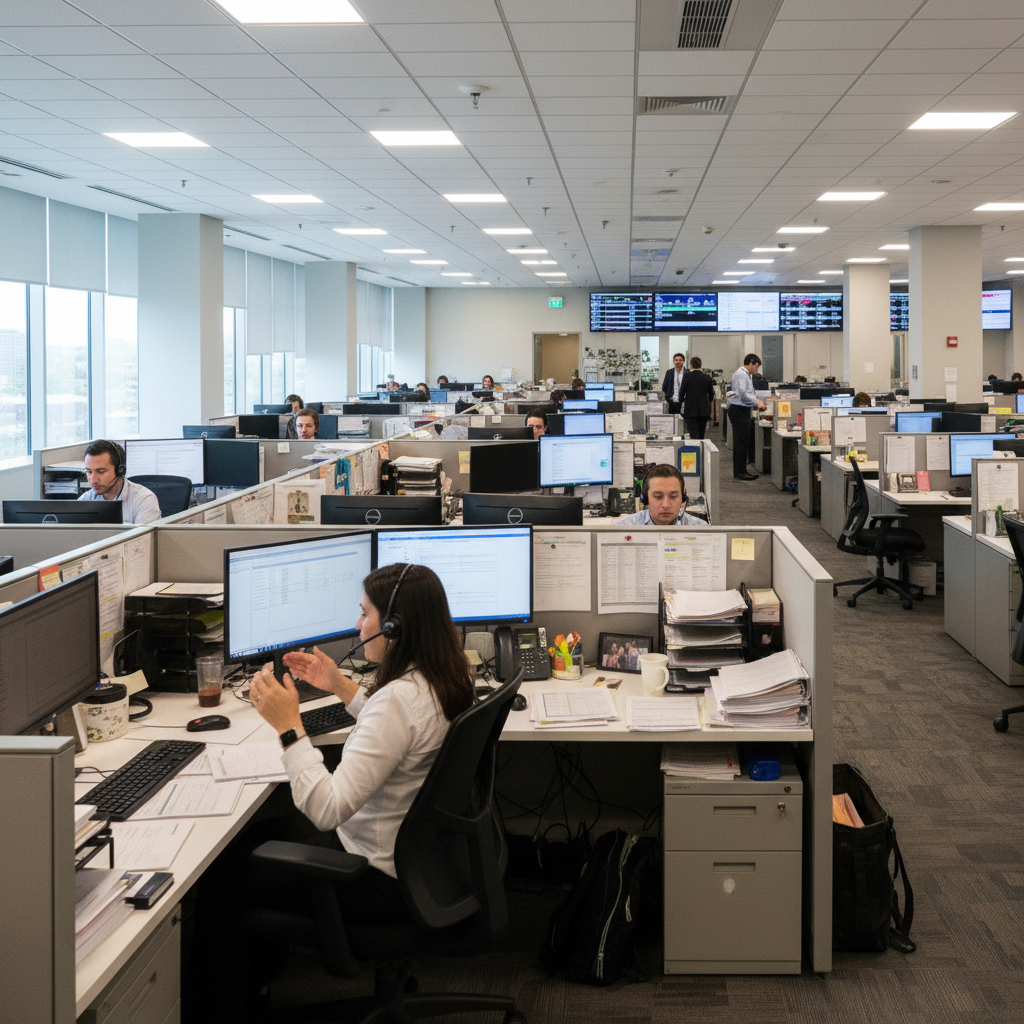
The incident began with a redundancy notice for dozens of CBA employees with years of experience. The bank said its recently launched artificial intelligence (AI) voice bot had cut incoming calls by around 2,000 a week, and the employee numbers were no longer required to match the level of demand. Some of the affected workers were described as having decades of service at the bank.
Employees soon complained that the bank’s explanation did not appear to line up with their own experience. Far from declining, call volumes at the time of the redundancy notices were alleged to have been increasing. In fact, management had reportedly been in crisis mode trying to find staff to answer calls, with managers redeployed to take calls and staff that remained being offered overtime to cope with the volume.
That claim prompted the union to take the case to a fair work tribunal. The FSU alleged that CBA had failed to properly explain how the employee roles were determined to be redundant, and that it also may have been disguising the fact that the decision to cut staff was made to shift roles to India (where it was hiring staff for the same work). The union’s position was that the claim of AI disruption to calls was creating the impression that CBA was using the chatbot as an excuse for an offshoring decision.
In the tribunal, CBA has since confirmed that this was the case. Bank representatives testified that they “failed to take into account a sustained increase in call volume, which was in place at the time the notice of termination was given and in fact continued for months after the notice was given.” That spike in calls directly undermined the bank’s initial rationale that calls had been reduced, and that “this error meant the roles were not redundant,” the bank said in the tribunal.
The backtracking has since led to an apology and reinstatement for workers, with the 45 staff given the option to return to their previous roles, reapply for new positions at the bank, or take an exit package. “We have apologized to the employees concerned and acknowledge we should have been more thorough in our assessment of the roles required,” a bank spokesperson told Bloomberg.
The FSU has hailed the backflip as a “massive win for our members,” but there was also an acknowledgment that the damage had already been done to the employees. Staff had faced weeks of uncertainty over their roles, with the prospect of sudden joblessness not just an abstract fear, but something that threatened to leave them unable to pay their bills. The broader concern was that employers would push forward too quickly with AI systems without taking into account their human costs.
The bank has signaled no sign of slowing its efforts to automate despite the backflip. This week, CBA signed a partnership agreement with OpenAI, a leader in large language models. In this case, the CBA partnership will focus on the development of “advanced generative AI tools to help with scam detection, improve fraud prevention, and enable more personalized services for customers.” The bank was quick to point out that this was “about investment and embedding the responsible use of AI,” but it has clearly failed to convince many employees that this is the case.
The case is one of many in an industry under transformation. Estimates from Bloomberg Intelligence have suggested banks around the world could see up to 200,000 job cuts in the coming three to five years as automation and AI eat into back office, middle office, and operations roles. The rationale from banks has been on cutting costs and improving efficiency, but the situation with CBA has become an object lesson in the reputational damage that can arise from missteps with AI, and the need to better manage the expectations of employees and customers.
In the short term, the employees at the center of the issue must decide whether to return to work at CBA or take a payout. The union has said many will opt for the latter, saying trust with management has been eroded to the point that there is no way back. “The damage has already been done,” the union said, adding that this is a reminder for staff that change can come “very quickly, and there’s no worker that’s immune from it.”
However, the union has also confirmed that while this fight has concluded, it is now pursuing another case with the Fair Work Commission. This time, the case involves CBA’s consultation obligations with regard to its AI strategy more broadly. How much this will stop or slow the bank’s ambitions remains to be seen, but it is clear this is going to be a far messier road to AI in banking than some might have expected.