
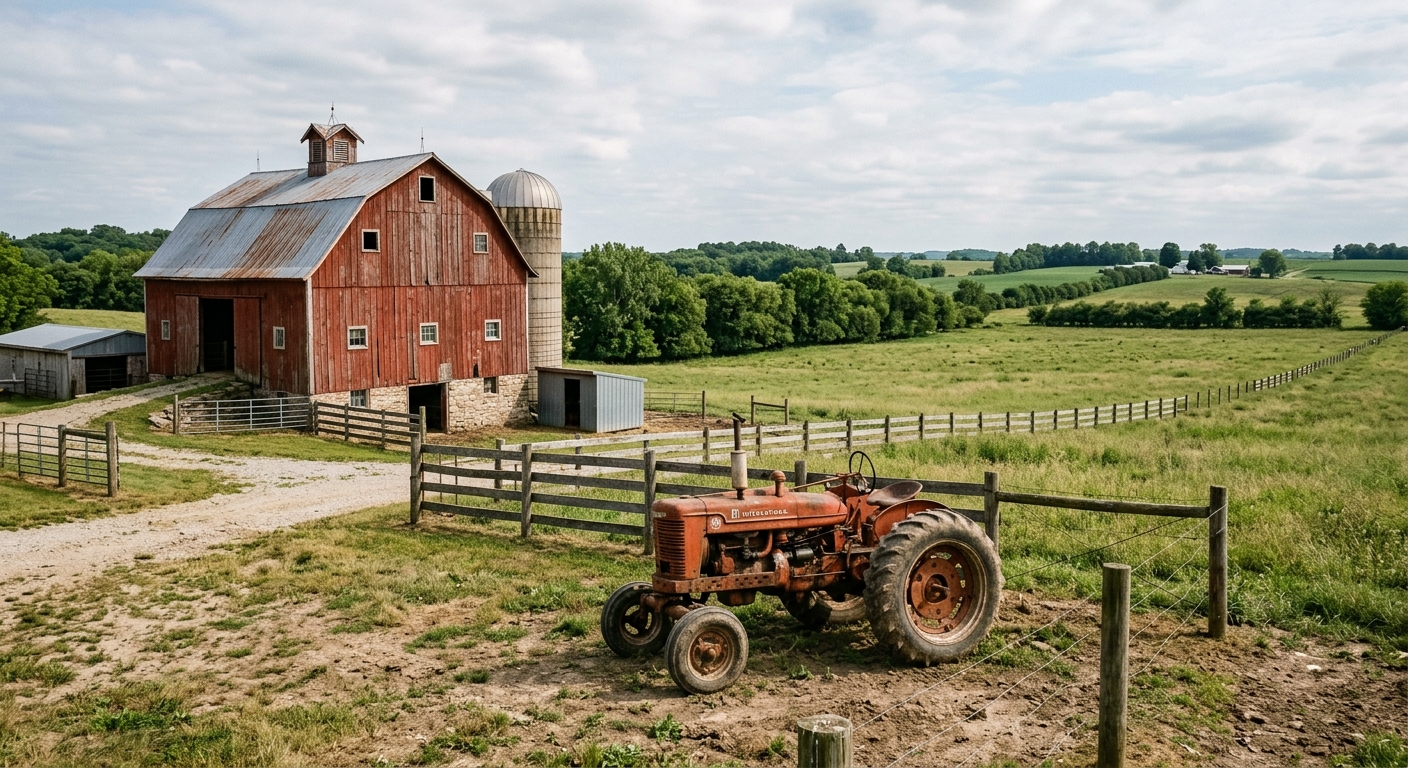
AI-generated illustration; not a photograph of the reported event.
- calendar_today June 4, 2026
As Dairy Month unfolds across Wisconsin, a critical new report from U.S. Senator Tammy Baldwin underscores mounting challenges facing Wisconsin farmers amid turbulent federal policy shifts. The report singles out the effects of recent trade wars, surging agricultural costs, and reductions to essential safety-net programs, all of which have placed the livelihoods of local agricultural producers under considerable strain.
Escalating Trade Tensions and their Lasting Effects
The report points to the trade war impact as a central driver of difficulties for Wisconsin farmers. Tariffs imposed amidst ongoing disputes have resulted in the loss of key overseas buyers, most notably a sharp decline in soybean exports to China. This reduced market access has directly contributed to a projected national financial loss surpassing $34 billion for U.S. farmers by 2025, with Wisconsin’s agricultural sector bearing a significant share of that burden. Dairy farmers across the region, traditionally a pillar of the state’s rural economy, have reported severe disruptions in their business operations as global customers turn elsewhere.
Rising Agricultural Costs and Input Prices
In addition to external trade shocks, farm input prices have spiked dramatically. According to Senator Baldwin’s findings, diesel prices have climbed by 80% and fertilizer expenses have surged 50%—a jump attributed largely to geopolitical instability tied to the war in Iran. These rising agricultural costs have squeezed margins for both large and small dairy operations throughout Wisconsin, leaving many producers struggling to break even or remain solvent through a volatile planting and harvest season.
Impact on Healthcare and Food Assistance Programs
The report also warns that the effects of federal policy extend well beyond the farm. Cuts to the Supplemental Nutrition Assistance Program (SNAP)—an essential form of food assistance for many rural families—as well as Medicaid cuts have emerged as grave concerns for the agricultural community. Rural hospitals in Wisconsin, already operating on narrow financial margins, face the threat of reduced funding, while farmers and their families encounter rising health insurance premiums. These factors compound financial pressures and can undermine long-term rural health and sustainability.
Farmers’ Voices from the Field
Senator Baldwin’s research is grounded in direct engagement with Wisconsin farmers across the state. These conversations reveal not only economic stress but a prevailing sense of uncertainty about the future. Many dairy farmers have voiced concerns over unpredictable trade environments, shrinking markets, and difficulties managing farm input prices. The cumulative effect is felt not only economically but in community morale, with rural leaders in Wisconsin seeking support to maintain local agricultural heritage in the face of mounting obstacles.
Calls for Immediate Federal Relief
As President Trump visits Wisconsin, Senator Baldwin’s report urges meaningful federal relief for farmers rather than promises that fail to address real needs. Recommendations center on restoring food assistance, safeguarding health insurance affordability, protecting rural hospitals, and providing direct assistance to those affected by agricultural costs and diminished export opportunities. Stakeholders across the region echo the need for action to stabilize the agricultural landscape and ensure Wisconsin’s farming families can weather current economic and policy storms.
Looking Ahead for Wisconsin Agriculture
The agricultural economy in Wisconsin has long been shaped by the resilience and ingenuity of its dairy farmers and producers. However, the current convergence of high farm input prices, lost market access, diminished food assistance, and cuts to Medicaid threaten to erode this legacy. Senator Baldwin’s report underscores the urgency of responsive policy changes and bolstered support for rural communities, not just during Dairy Month, but year-round. As the debate over agricultural policy continues, Wisconsin’s farming community remains central to the state’s identity and future prosperity.


