- calendar_today August 20, 2025
.
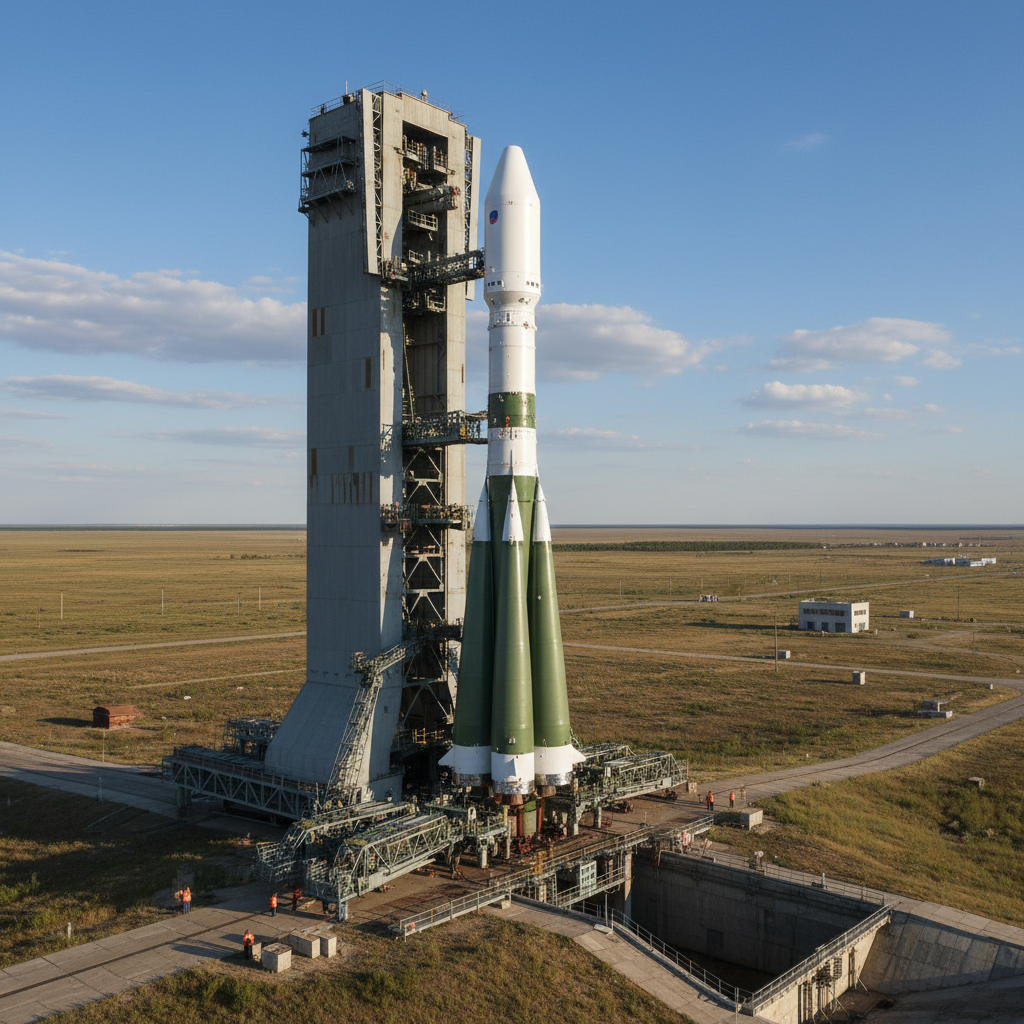
Roscosmos, Russia’s state space corporation, is planning to send its next-generation Soyuz-5 rocket into space before the end of the year, Dmitry Bakanov, the agency’s head, told TASS, a state-owned news agency.
“Yes, we are planning for December,” Bakanov said. “Everything is in place.”
If the launch takes place, the Soyuz-5 rocket will fly for the first time after more than a decade of development. Roscosmos will attempt multiple demonstration flights, but the rocket will likely not enter service until 2028.
Soviet Origins, Modern Challenges
The Soyuz-5, also known by the codename Irtysh, is not a revolutionary design. Instead, it uses many of the same concepts as earlier Soviet rockets, modernized and refitted with all-Russian production.
Soyuz-5 is a medium-lift launch vehicle with the ability to send around 17 metric tons to low-Earth orbit (LEO). The rocket has slightly larger fuel tanks than the Zenit-2 rocket, which means it can send more weight into orbit.
The heart of the new Soyuz-5 design is the RD-171MV engine. This is a new variant of the first-stage engine developed as far back as the Soviet Union’s Energia program in the 1980s, which had launched the Buran space shuttle. The RD-171MV is the spiritual successor to the RD-171 engine that powered the Zenit-2.
The RD-171MV does not include any Ukrainian components, unlike its predecessor. It is a kerosene and liquid oxygen engine that produces more than 3 million pounds of thrust, more than triple the power of one Space Shuttle main engine. The RD-171MV is considered to be the world’s most powerful liquid-fueled rocket engine.
Soyuz-5 Uses and Capabilities
The Soyuz-5 rocket is expendable, unlike many of its competitors, such as SpaceX’s Falcon 9. The differences in the design will make it hard for Soyuz-5 to compete on price in the coming years.
For Russia, the Soyuz-5 rocket will likely be used to replace both Zenit and the older Proton-M launcher. Proton-M is no longer in production. Soyuz-5 is an opportunity for Moscow to remain largely independent of its previous partners.
Sanctions and Russian President Vladimir Putin’s war in Ukraine have limited Moscow’s ability to fund space development. The Russian space agency has cut corners wherever possible to put the Soyuz-5 into development.
While Soyuz-5 is still not a state-of-the-art rocket, Russian analysts believe it is more a case of treading water. The Soyuz-5 program allows Moscow to keep its space industry operating, but it is not an upgrade or a step forward. That leap will likely come in the form of a Soyuz-7 rocket or, as it is also known, the Amur project.
The Amur is a heavy-lift rocket featuring a reusable first stage and methane-fueled rocket engines. The design is ambitious, but its development has experienced delays. Amur is not now expected to fly before 2030.
Will Soyuz-5 Compete?
The key question now is whether Soyuz-5 will be competitive for commercial launches beyond Russia. Today’s market is dominated by SpaceX and, to a growing extent, Chinese space companies, both of which have lower costs and reusable technology.
Russia still uses its Soyuz-2 launch vehicles for crewed missions and Angara launch vehicles for heavy payloads. Neither program has developed significant business outside Russia.
The Soyuz-5 will need to prove itself and undercut the prices of Western companies. The Russian space program will have its work cut out if it is to win commercial launches.
Roscosmos will turn its attention to the Soyuz-5 in December when the rocket attempts its first launch from Baikonur. A successful flight would prove Moscow still has the means to make new space hardware despite sanctions and economic challenges.
Soyuz-5 may not be a leap forward in launch vehicle technology, but for Roscosmos, it is a step toward technological independence and the continuation of a struggling industry.