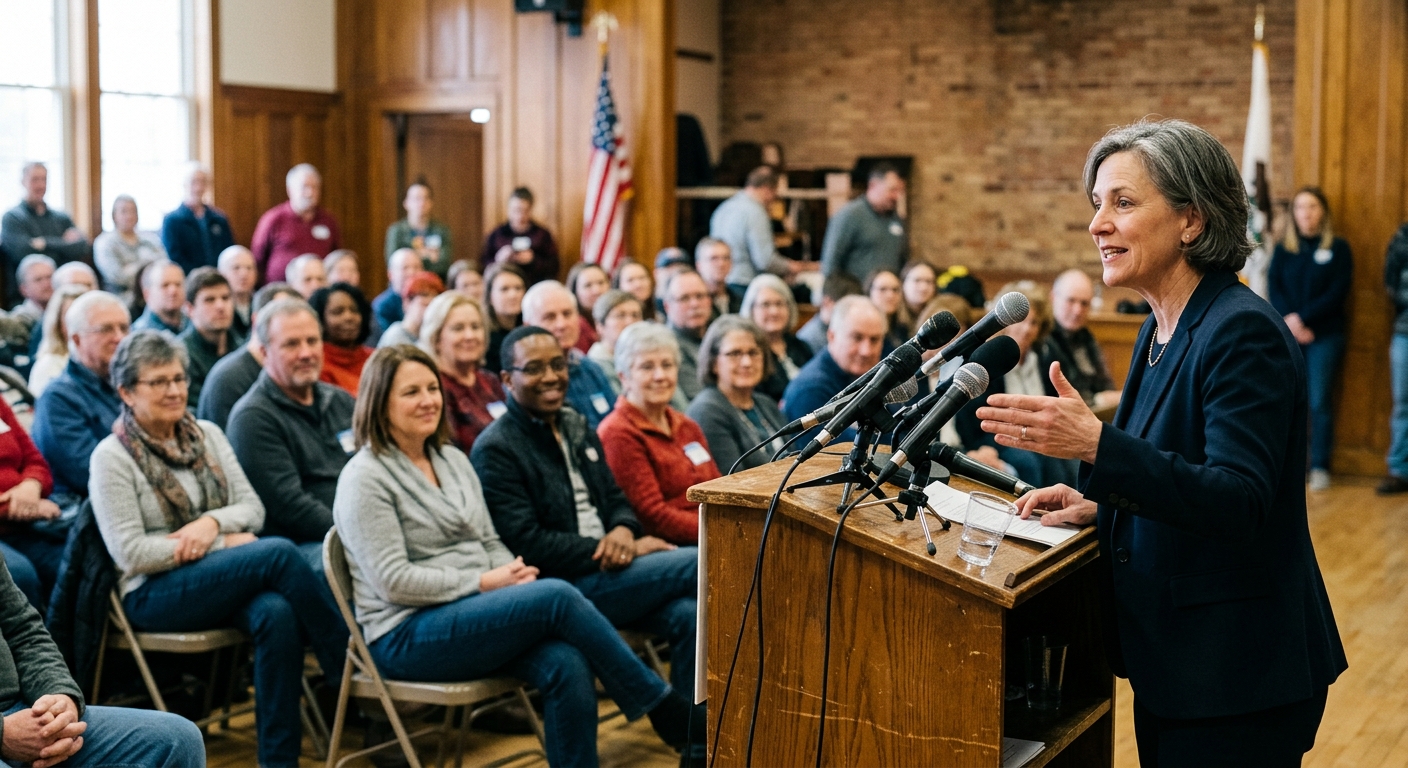
AI-generated illustration; not a photograph of the reported event.
- calendar_today June 14, 2026
The Wisconsin governor race entered a new phase this week as leading democratic candidates sharpened their focus on Republican Tom Tiffany, the presumptive GOP nominee, during a spirited forum with party activists from across the state. Against the backdrop of an energized crowd, contenders presented contrasting visions for Wisconsin while uniting around a central goal: defeating Tiffany in the upcoming governor election.
Democrats Critique Tiffany’s Agenda
Throughout the evening, Tom Tiffany remained at the center of discussion, with Democrats asserting that his positions align too closely with former President Trump’s policies. Lt. Gov. Sara Rodriguez argued that Tiffany’s support of the Trump agenda has driven up costs and hurt families across Wisconsin, a sentiment echoed by former Lt. Gov. Mandela Barnes, who labeled Tiffany a coward for what he described as evasive political stances.
Gubernatorial Contenders Emphasize Diverse Experience
Highlighting the depth of the Democratic field, each of the gubernatorial contenders staked out approaches for leading Wisconsin. Joel Brennan called attention to the opportunity for Democrats to flip legislative chambers and finally end what he described as the Walker era—a period he claims Tiffany’s perspective would only continue. Milwaukee County Executive David Crowley promised to repeal minimum fuel markups, focusing his campaign on alleviating economic pressures for Wisconsin residents. This approach, Brennan suggested, would represent a clear break from previous administrations.
Political Debate Centers on Economic Justice
Economic issues dominated the political debate, as candidates stressed the need for broad economic justice. State Rep. Francesca Hong—invoking the legacy of influential Wisconsin leaders of generations past—unveiled progressive plans for the state, aiming to uplift working families and expand access to new opportunities. Barnes, echoing these themes, pledged to fight against corruption and corporate greed that he argued has long shaped wisconsin politics.
Progressive Policies and Party Priorities
Kelda Roys, a current state senator, emphasized her consistent opposition to corporate influence and touted her credentials for ushering in a new governing era for Democrats. Roys also framed her candidacy as a bridge between progressive ideals and effective statewide governance.
Former WEDC Secretary Missy Hughes, who played a central role in Wisconsin’s economic recovery efforts, highlighted her record of delivering economic growth. Hughes called on party activists to back a candidate prepared to translate policy into practical results, underscoring the importance of proven leadership during a pivotal election cycle.
State Leadership and Local Impacts
Throughout the forum, references to the need for strong state leadership resonated with regional voters. Candidates frequently invoked Wisconsin’s proud tradition of progressive reform, linking this legacy to pressing local issues such as cost of living, corporate accountability, and government transparency. Across policy proposals and criticisms of the opposition, the focus remained on strengthening local economies while moving the state toward modern progressive policies.
Looking Ahead to the General Election
As the Democratic field continues to clarify its strategy, the central question remains which approach and candidate can best unite Wisconsin voters and counter the influence of Tom Tiffany. With the wisconsin governor race capturing regional attention, all candidates underscored pragmatic leadership and economic justice as central to their campaigns and to the future of the region.