- calendar_today August 12, 2025
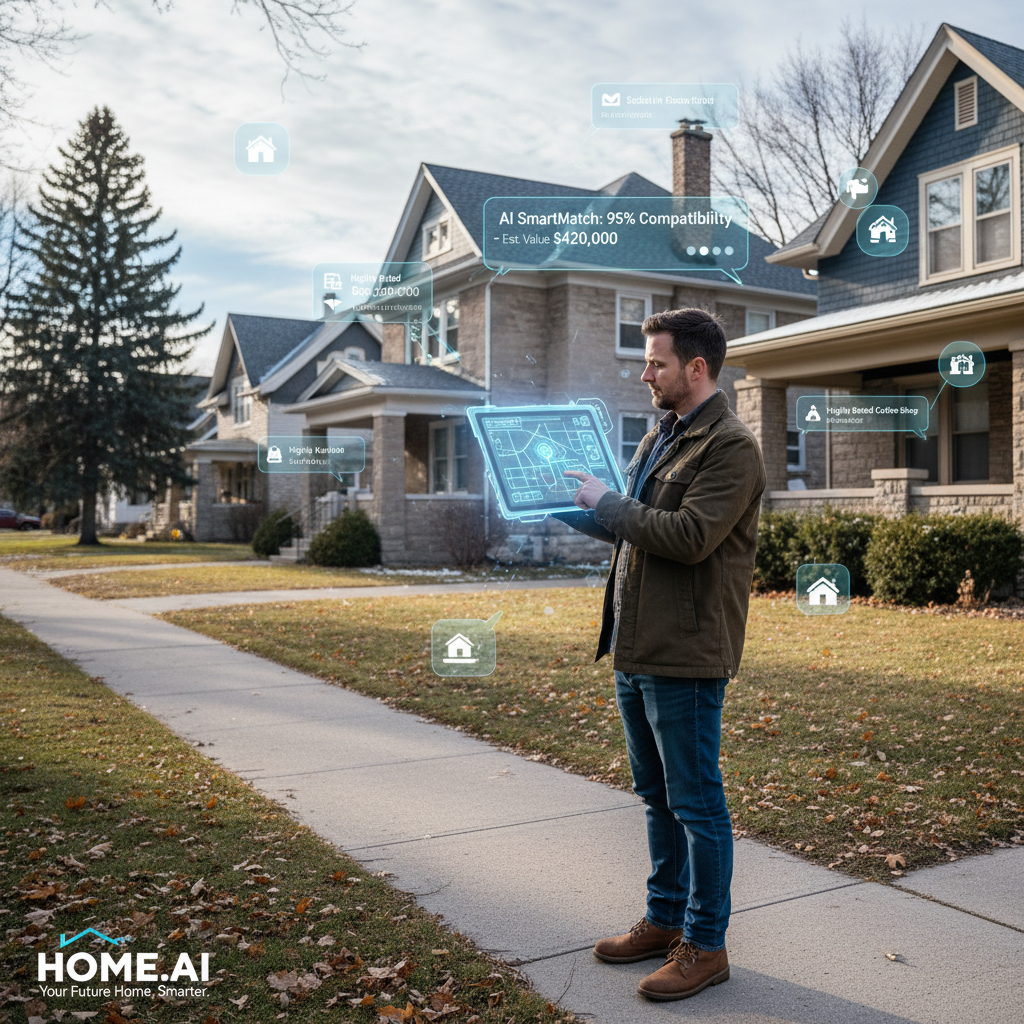
In 2025, Wisconsin’s housing market is evolving—not just because of economic shifts or interest rates, but because of artificial intelligence. Whether you’re buying a lakeside cabin in Vilas County, a family home in Madison, or a condo in Milwaukee’s Third Ward, AI is quietly embedded in nearly every step of the process.
With a blend of urban hubs, college towns, and vast rural stretches, Wisconsin presents a unique real estate landscape—and AI is proving especially useful in navigating its complexity. From intuitive listing suggestions to predictive price modeling and automated lending processes, buyers across the Badger State are embracing tech-enhanced homebuying with cautious optimism.
Smarter Search Tools for Wisconsin Buyers
Here is how AI is transforming lives in Wisconsin:
1. Personalized Listings
AI-powered real estate apps now tailor listings based on search history, income levels, and lifestyle preferences. For example, someone looking in Green Bay for walkable communities with nearby schools will see different results than a remote worker seeking acreage outside Eau Claire.
2. Neighborhood Forecasts and Value Predictions
Wisconsin-specific AI tools trained on municipal data, housing permits, school rankings, and migration patterns can now predict which neighborhoods are poised for appreciation. This is especially valuable in cities like Madison or Waukesha, where local demand is shifting post-pandemic.
3. Streamlined Mortgage Pre-Approvals
Banks and credit unions in Wisconsin increasingly offer AI-powered pre-approval portals. These systems analyze financial data, tax returns, and credit history in minutes, giving buyers in competitive markets—like Appleton or Middleton—an edge with sellers.
The Rural Advantage: How AI Helps Beyond the Cities
Much of Wisconsin’s housing stock lies outside its major metros. In areas like Door County, the Driftless Region, or Iron County, AI is making a big difference in accessibility:
- Expanded Listings Coverage: AI tools scrape government databases and auction sites to surface off-market or for-sale-by-owner homes—often overlooked by traditional MLS systems.
- Virtual Tours and Property Mapping: Using drone data and generative image tech, buyers can explore remote properties without the long drive—helpful when shopping for farmland or second homes.
- Land Use and Zoning Guidance: AI overlays can analyze local zoning codes and topography to inform buyers about future development potential or restrictions, ideal for rural investments.
Local Examples of AI in Action
Have a look at the following stats prevailing in the local markets:
- Milwaukee: Real estate platforms in 2025 now use AI to assess gentrification trends block by block, identifying opportunities for first-time buyers near upcoming infrastructure projects.
- Madison: AI bots assist buyers with affordability calculators tailored to Dane County’s unique tax structure and cost-of-living factors.
- La Crosse and Eau Claire: Smaller cities are seeing AI tools help match buyers with energy-efficient homes or homes eligible for state renovation grants.
- The Northwoods: In tourism-heavy zones like Minocqua or Rhinelander, predictive analytics help cabin investors gauge seasonal rental potential before purchasing.
For Sellers: A New Kind of Home Valuation
Homeowners across Wisconsin can now use AI-driven tools that deliver near-instant market assessments by analyzing comparable sales, Google Street View imagery, and historical pricing fluctuations. These are especially useful in neighborhoods with uneven turnover—like older communities in Kenosha or Racine.
Some platforms also use AI to recommend low-cost upgrades (e.g., energy-efficient appliances, exterior repainting) likely to boost sale price, based on current buyer behavior in your zip code.
The Limitations: Where AI Still Falls Short in Wisconsin
While AI can enhance the experience, it doesn’t replace everything—especially in a state as diverse and nuanced as Wisconsin.
- Lack of Data in Sparse Regions: AI algorithms struggle in counties with limited transaction history or inconsistent data, such as Forest or Menominee counties.
- Digital Access Gaps: In some rural communities, reliable broadband is still lacking—making AI-dependent tools less accessible.
- Overreliance on Predictions: AI can’t factor in “gut feel,” local quirks, or emerging cultural shifts that often define neighborhoods—particularly important in tight-knit towns like Baraboo or Sturgeon Bay.
Agents and AI: A Collaborative Future
Far from replacing Wisconsin’s real estate agents, AI is shifting their role. Many agents now act as data interpreters—guiding clients through AI-generated suggestions, mortgage pre-checks, and dynamic price forecasts.
Buyers who embrace this hybrid model—where human experience meets machine precision—are gaining a competitive edge. This is especially true in fast-growing areas like Sun Prairie or suburban Fox Valley, where homes are increasingly snapped up within days.
The Wisconsin Buyer in 2025: More Informed, Better Equipped
From lakeside retreats to suburban new builds, Wisconsin buyers in 2025 are navigating the market with more insight than ever before. AI tools are helping them move quickly, negotiate with confidence, and find homes that truly match their needs—not just their price range.
And while real estate will always be about location, timing, and budget, AI is making sure those decisions are now grounded in better data—whether you’re in Milwaukee’s Bay View or a cabin near Bayfield.
In Wisconsin’s next housing chapter, the smart money isn’t just about dollars. It’s also about data—and the tools that turn that data into decisions.