- calendar_today August 7, 2025
Stegmaier: It’s Hard to Design Games When the Future Feels Bleak
The board game industry, a business that prides itself on creativity, community, and a fairly slim margin of profit, is in a financial crisis that some are worried will lead to an existential one. Game designer Jamey Stegmaier, the mind behind award-winning hits such as Scythe and Wingspan, shared his anger this week at a newly announced 54 percent tariff on all goods made in China and imported to the United States.
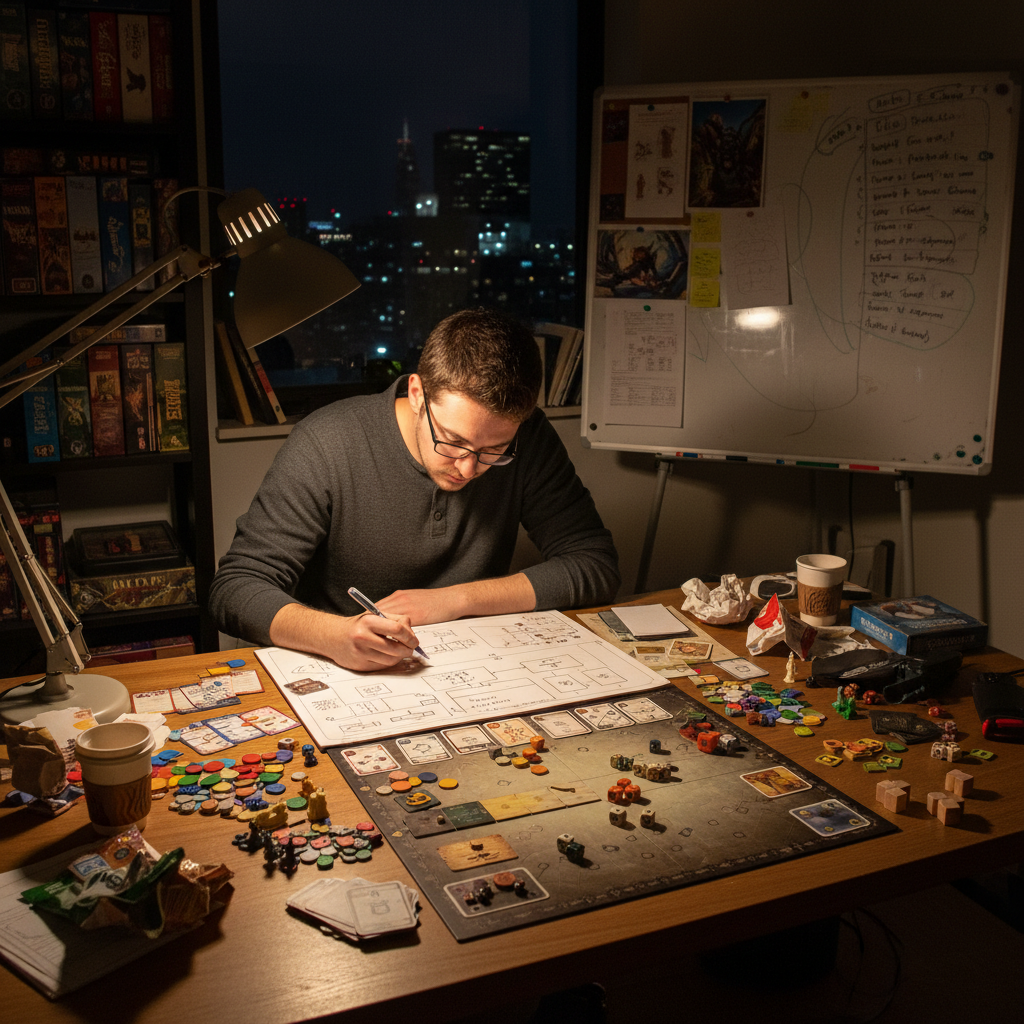
“In the middle of the design of the new game, last night I tried to work on a new game I’m brainstorming, but it’s tough to create something for the future when that future looks so grim,” Stegmaier wrote in a blog post. “I mostly just found myself staring blankly at the enormity of the newly announced 54 percent tariff.” For a designer whose games are played and loved worldwide, it was an unusually raw and personal post—and one that is resonating across the industry.
A Global Business Model, Thrown Into Crisis
America’s board game market depends on game components being produced in China. Board games are also produced in countries such as Germany, which is sort of the spiritual home of modern tabletop gaming, but China is where most publishers go to get it all done: printed cards, custom plastic miniatures, wooden tokens, die-cut boards, and specialty dice.
The components could technically be made in the United States and elsewhere, but the economic reality of doing so is so far away from viable that it’s a nonstarter. Stegmaier said that when he started making games, he was quoted a price of $10 by a U.S.-based manufacturer. Just to produce and package an empty game box. In China, $10 will get you the production and packaging of an entire game.
That’s why this new tariff on imported goods is such an existential crisis. Profit margins for U.S. board game publishers—especially smaller and mid-sized publishers—have never been razor thin. To have the profit margin on every game blown out to zero with no lead time at all is earth-shaking for the industry.
Industry Insiders Weigh In
Stegmaier isn’t alone in speaking out. Meredith Placko, CEO of Steve Jackson Games, wrote in her blog post that her company, which produces classics such as Munchkin, makes all its games in other countries for the same reason Stegmaier and everyone else in the industry do.
“I get asked ‘Why not manufacture in the US?’ all the time,” Placko wrote. “I wish we could. I’ve been trying for years to find a way to do that. But the infrastructure to support full-scale boardgame production—specialty dice making, die-cutting, custom plastic and wood components—doesn’t meaningfully exist here yet. I’ve gotten quotes. I’ve talked to factories. Even when the willingness is there, the equipment, labor, and timelines simply aren’t.”
Placko, like Stegmaier, said this was a threat to her business model itself. “This is not just a policy change. It’s a seismic shift for our industry,” she wrote.
Rob Daviau, co-founder of Restoration Games and game designer of Pandemic Legacy, has also been warning for months that such a move would be the end of the board game industry. Daviau has long been outspoken on social media, writing that almost every meeting he has had with business partners since Trump’s election has been “an existential crisis about our industry.” In an interview with BoardGameWire, Daviau was blunter, saying, “I think if we had tariffs like this that we will see a great collapse in the hobby gaming market in the US.”
Gamers Could Be Affected
Gamers, too, may soon feel the pinch. Board games will likely cost more to retail, and some companies may try to reduce quality to keep retail prices down, sacrificing production value. Other companies may hold back on new games entirely.
There is also the matter of local game stores. Already struggling in the face of online competitors, game stores may take another hit as customers turn to their collections of unplayed games (on what is lovingly called their “shelves of shame”) or buy online at better prices.
“Within a few months, US companies will lose a lot of money and/or go out of business,” Stegmaier added in a later tweet. “And US citizens will suffer from extreme inflation.”
Some publishers may find some relief by shipping their games to non-U.S. distributors instead (European markets are also less affected by tariffs). But that doesn’t help U.S. companies, as it doesn’t change the economic equation of the game itself, which is what Stegmaier is concerned about. “65% of my sales are in the US. The Chinese factories will still need to charge the US companies that much more,” Stegmaier wrote.
Even more frustrating is that many publishers have no recourse if they already have games in production. The ones that can adjust or alter their plans are for games still in design or early production, and even then, companies can only budget accordingly. But for a publisher that has already got games produced and on their way from a Chinese factory, there is no workaround.
Chris Solis, head of Solis Game Studio in California, said he had 8,000 games leaving a factory in China this week, with no way to stop them. “Now I need to scramble to cover the import bill for what will likely be well over a million dollars.”
The Industry Unites in Anger
The Game Manufacturers Association (GAMA), a lobbying organization for board game publishers, has been outspoken against the tariffs and met with government representatives on the issue several times.
So far, their efforts have come to nothing, but the industry is united in its anger, and all anyone seems to be able to do is wait and see what happens. The question now is just how drastically the board game industry will be reshaped by this policy.