- calendar_today August 12, 2025
The Real Estate Market Is Stabilizing, But Investors Aren’t Standing Still
After several years of price surges and volatility, Wisconsin’s housing market in 2025 is showing signs of cautious balance. Median home prices across the state have plateaued, echoing national trends. According to data from the Wisconsin Realtors Association (WRA), statewide home sales saw a modest uptick in early 2025, with inventory still tight but improving.
While mortgage rates remain around 6 percent and inflation eased to 2.8 percent in March, today’s market is defined less by bidding wars and more by calculated decision-making. Investors, from Milwaukee to Green Bay, are reassessing their strategies with a focus on long-term returns and regional market dynamics.
For many, the question isn’t whether real estate remains viable—it’s where in Wisconsin the smartest investments lie.
Build-to-Rent Communities Reflect a New Era in Housing Demand
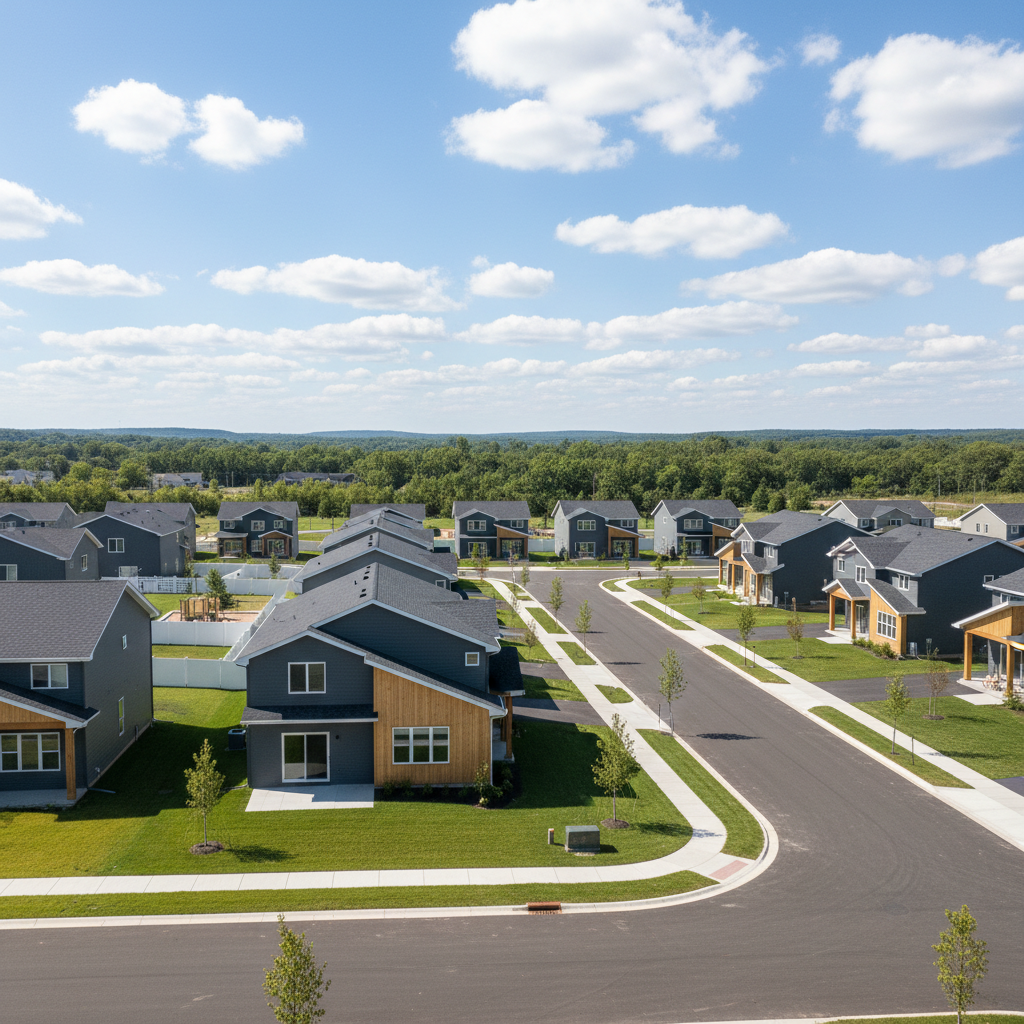
One of the most significant shifts in Wisconsin’s residential landscape is the growing popularity of build-to-rent developments, particularly in the state’s suburban corridors near Madison, Kenosha, and the Fox Valley. These purpose-built rental neighborhoods cater to households priced out of homeownership or those seeking the flexibility of renting with the space of a single-family home.
Although more prominent in Sun Belt states, the trend is gaining momentum in the Midwest. Local developers are exploring this model in counties like Waukesha and Dane, supported by investor interest and demographic pressures. Millennials in Wisconsin—many burdened by student loan debt—continue to rent longer, while Gen Z is showing caution amid economic uncertainty.
The demand is clear: in 2025, well-located rental housing is becoming a strong asset class in the Badger State.
Smaller Cities and Secondary Markets Gain Ground
As major metros like Chicago cool off, Wisconsin’s secondary markets are seeing renewed attention. Cities such as La Crosse, Eau Claire, and Oshkosh are benefiting from increased immigration, affordability, and remote work trends.
Zillow’s recent rankings may have named Buffalo the hottest housing market nationally, but in the Midwest, Madison continues to stand out for its blend of tech employment, education, and livability. Milwaukee, though more mature, is seeing pockets of revitalization in neighborhoods like Bay View and Riverwest, offering opportunities for value-add investments.
These smaller markets present lower entry costs and potential for appreciation—an appealing combination for investors seeking Midwest growth stories.
Mortgage Rates and Inflation Shape the Investment Climate
National interest rates, currently held between 4.25% and 4.5% by the Federal Reserve, are contributing to a sense of stability across Wisconsin’s lending landscape. The relative predictability of rates is encouraging buyers and investors to cautiously re-enter the market.
However, affordability remains a concern statewide. With 30-year fixed mortgage rates averaging close to 6 percent, monthly housing payments remain elevated compared to pre-pandemic years. This dynamic continues to support demand in Wisconsin’s rental market, particularly in college towns like Stevens Point and Whitewater, and workforce hubs like Green Bay.
Commercial Real Estate Remains a Cautionary Zone
Wisconsin’s commercial real estate sector is a mixed picture. Office vacancy rates in downtown Milwaukee remain elevated, following a broader national trend toward hybrid work. According to data from Colliers International, demand for Class A office space is softening, and companies are downsizing their real estate footprints.
However, industrial and logistics properties are holding strong. With Wisconsin’s central location in the Midwest supply chain, cities like Racine, Janesville, and Fond du Lac are benefiting from demand for distribution and last-mile delivery hubs, especially with e-commerce continuing its expansion.
Retail is adapting as well. Malls in Brookfield and Appleton are experimenting with mixed-use redevelopments, blending residential and commercial usage to revitalize underutilized space.
REITs and Real Estate Funds Offer Alternative Exposure
For Wisconsin investors hesitant to dive into direct ownership, real estate investment trusts (REITs) and ETFs remain accessible avenues. The Vanguard Real Estate ETF (VNQ) has gained 9 percent over the past year, a promising sign for those seeking real estate exposure without acquiring physical property.
REITs focused on multifamily housing and logistics are outperforming those linked to office or retail real estate. As always, diversification is key, particularly for investors balancing risk in a regional portfolio across the Midwest.
What to Watch for the Rest of 2025
Several factors will influence Wisconsin’s real estate outlook through the remainder of 2025. The upcoming U.S. presidential election and potential fiscal policy changes could ripple through interest rates and investor sentiment. Additionally, global economic shifts and supply chain disruptions will impact the industrial property landscape across the state.
Climate risks, while less acute in Wisconsin than in coastal regions, are also being considered more seriously. Flood zones along the Mississippi River and Lake Michigan are drawing increased scrutiny. Insurance rates and building codes are slowly adapting in response.
A Time for Caution, But Not Inaction
Wisconsin’s real estate market in 2025 may not offer quick wins, but it remains a strategic and resilient investment arena. Opportunities abound in the state’s emerging cities, growing rental markets, and industrial corridors, especially for those willing to research and adapt.
Whether you’re eyeing residential properties in Sun Prairie, multifamily units in Wausau, or considering REITs with exposure to the broader Midwest, the key in 2025 is not to act fast—but to act wisely.
For weekly insights on Wisconsin housing markets, mortgage trends, and investment strategies, subscribe to our regional real estate investor briefing.