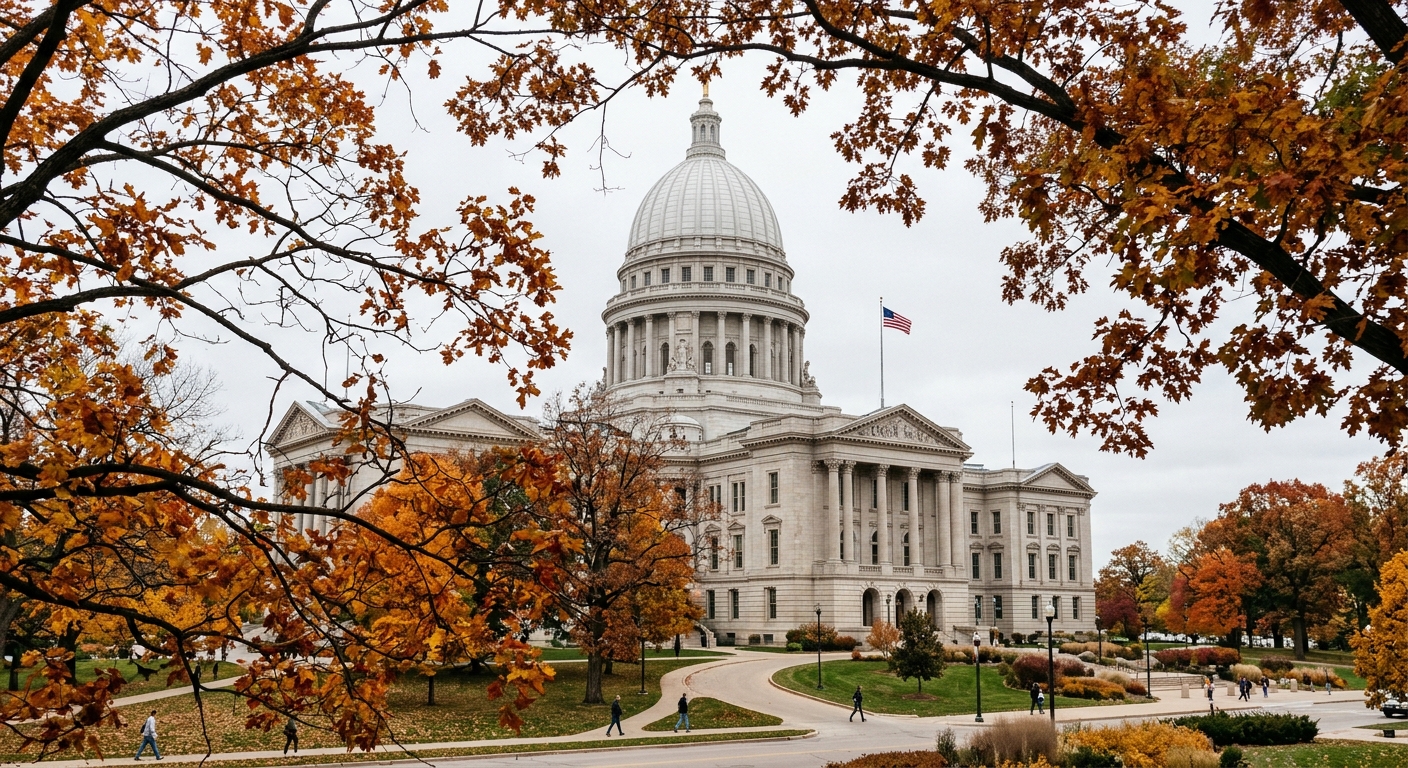
AI-generated illustration; not a photograph of the reported event.
- calendar_today November 2, 2026
Reflecting on the 1982 and 2026 Wisconsin Elections
The year 1982 is often remembered in Wisconsin for the Brewers' dramatic run to the World Series. However, it was also a significant year in the state's political arena—a parallel seen once again in 2026 as Wisconsin faces another pivotal election year.
Races for Governor and Attorney General
Both 1982 and 2026 feature gubernatorial elections prompted by the retirement of incumbents. In 1982, Democrat Tony Earl and Republican Terry Kohler vied for the position following Governor Lee S. Dreyfus’s decision not to seek re-election. Kohler entered the race noting his family’s legacy, as both his father and grandfather had held the governor’s office. That year, Earl, an experienced public official, ultimately secured the governorship with 56% of the vote, defeating Kohler.
This year, Milwaukee County Executive David Crowley is the Democratic nominee, while Republican Congressman Tom Tiffany, who represents northwest Wisconsin, is the GOP contender. The current race comes after Democratic Governor Tony Evers announced his retirement in July 2025, well before this year’s election.
In the race for attorney general, 1982 saw Bronson La Follette set a record as the first statewide candidate to garner more than one million votes. In 2026, Democratic Attorney General Josh Kaul faces a challenge from Fond du Lac District Attorney Eric Toney, who narrowly lost four years ago.
Contesting the State Legislature
Both years also feature battles for control of the Wisconsin Legislature. In 1982, Democrats retained comfortable majorities, securing a 19-14 edge in the Senate and a 59-40 hold on the Assembly. Currently, Democrats are working to flip two or more Senate seats to gain control for the first time since 1990 and hope to end a 16-year minority streak in the Assembly. Republicans currently hold six of Wisconsin's eight U.S. House seats, a shift from the nine incumbents (five Democrats, four Republicans) re-elected in 1982.
Debates Over the State Budget and the Economy
Economic concerns and state budget debates are a recurring theme. The 1982 campaign centered on job creation and the state’s fiscal health. Earl cited a $1.5 billion deficit from a recession and warned of likely tax hikes, while Kohler, emphasizing his business background, disputed the deficit figures and pledged a no-tax-increase budget. Notably, that year also saw the state sales tax raised from 4% to 5%, a rate unchanged today except for additional local surtaxes.
In contrast, this year’s election landscape features a substantial $3 billion state budget surplus, highlighting a significant difference between the two election periods.
Constitutional Amendments and Voter Decisions
Another point of similarity is the consideration of constitutional amendments. In 1982, voters approved nine proposed amendments. This November, Wisconsin voters are set to decide on three Republican-drafted proposed changes to the state Constitution.
Notable Election Outcomes and Voter Turnout
The 1982 election saw decisive results, such as Earl’s significant margin of victory in the governor's race and La Follette’s record-setting vote count for attorney general. Today, however, Wisconsin’s statewide elections are often determined by very narrow margins, sometimes less than 1%.
As Wisconsin looks to the polls in 2026, the echoes of its political past provide important context for understanding the present stakes and challenges in state politics.
Source: isthmus.com.