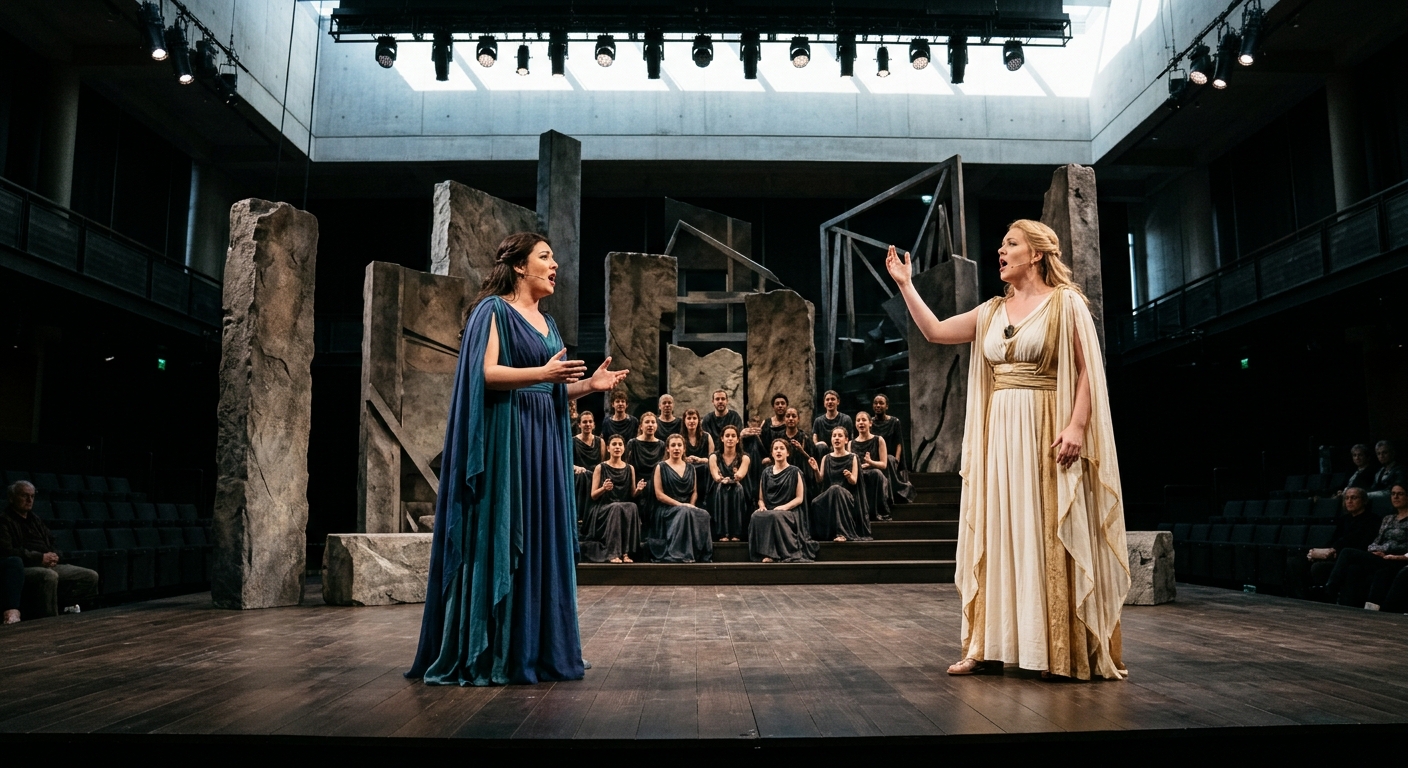
AI-generated illustration; not a photograph of the reported event.
- calendar_today October 31, 2026
Grand Opera Takes Center Stage
Madison Opera launched its 65th season on October 30 at Overture Hall with its first-ever staging of Vincenzo Bellini’s 1831 masterpiece, Norma. This bel canto opera, revered for its demanding vocal artistry, explores themes of passion, betrayal, and spiritual devotion. The production brings together a talented cast, a commanding chorus, and the celebrated Madison Symphony Orchestra for a memorable introduction to the company’s new season.
The Challenge of Bel Canto
Norma stands as a pillar of the bel canto tradition, a style that requires exceptional vocal flexibility, breath control, and expressive range. The central role of Norma, a Druid high priestess secretly raising two children with Pollione—the Roman commander of the occupying army—demands both technical mastery and emotional depth. The opera’s narrative escalates when Norma discovers her lover's affections have shifted to a younger priestess.
Standout Performances: Keely Futterer and Katherine Beck
Soprano Keely Futterer makes her role debut as Norma, taking on one of opera’s most demanding parts. Futterer approaches Bellini’s challenging score with notable vocal power and dramatic intensity, distinguishing her performance with a style that at times evokes Verdi rather than the traditional lyricism of bel canto. As Norma, she successfully conveys the shifting authority, vulnerability, and desperation required by the character, with only minor moments where her intensity risks overpowering the subtleties of the score.
Katherine Beck as Adalgisa, the younger priestess and unintended rival, offers a unique vocal color that shines particularly in ensemble moments. Both Futterer and Beck face the legacy of legendary performers such as Joan Sutherland and Marilyn Horne, yet come impressively close to establishing their own interpretations.
Strong Supporting Cast
Tenor Joshua Stewart delivers a resonant and consistent performance as Pollione, balancing the challenging role despite the character’s moral flaws. Bass Wm. Clay Thompson brings depth and authority to Oroveso, Norma’s father and the leader of the Druids, his rich tone anchoring scenes with gravitas and conviction.
The Heart of the Drama
While the men provide strong musical support, the opera’s true focus is on the evolving relationship between Norma and Adalgisa. After an initial confrontation, the two find common cause, culminating in their Act II duet "Mira, o Norma." This scene, with its interlacing melodies, highlights the emotional and vocal synergy between Futterer and Beck and stands out as a high point of the production.
Orchestra, Chorus, and Staging
Under the baton of principal conductor John DeMain, the Madison Symphony Orchestra provides sensitive accompaniment, giving the singers space to own Bellini’s melodies while delivering dramatic power during choral and orchestral climaxes. DeMain’s experience ensures that the orchestra supports rather than overpowers the vocal lines, especially in signature moments like the aria "Casta diva."
The Madison Opera Chorus, directed by Anthony Cao, punctuates the production with a commanding presence, especially during the rousing "Guerra, guerra!" Their unified and powerful sound adds urgency and authenticity to the Druids’ calls for rebellion.
Director Fenlon Lamb opts for a traditional staging that emphasizes ritual and the stylized conventions of opera. While action occasionally slows during reflective passages, Bellini’s score and the performers’ commitment make up for any narrative lulls.
A Tragic Finale and Lasting Impact
The drama accelerates toward Bellini’s emotionally charged conclusion, as Norma faces the consequences of her actions. What begins as a tale of romantic intrigue concludes with genuine tragedy, leaving audiences to contemplate issues of power, loyalty, and the interplay between personal and public lives.
Madison Opera’s Norma may not achieve perfection, but it earns admiration for tackling such a demanding work and for the strength of its principal and supporting cast. Futterer and Beck’s interpretations stand as impressive debuts, while John DeMain and the orchestra demonstrate why they remain integral to Madison’s musical landscape.
Norma returns to Overture Hall for another performance on November 1 at 2:30 p.m.
Source: isthmus.com.