
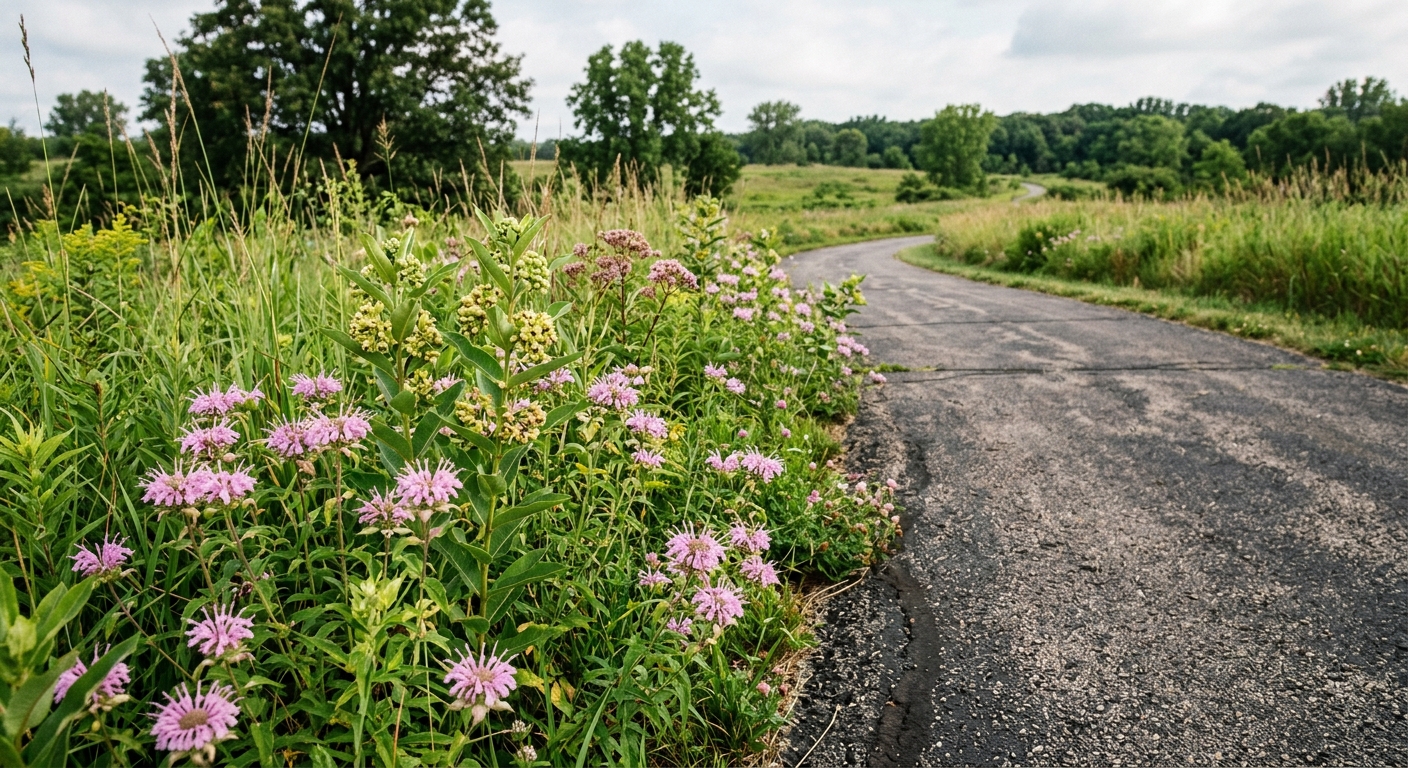
AI-generated illustration; not a photograph of the reported event.
- calendar_today August 29, 2026
Wisconsin’s extensive network of bike trails offers more than a scenic ride—these paths showcase an impressive diversity of native wildflowers integral to local ecosystems. Recently, community members have taken a slower pace along trails near Madison, Wisconsin, unveiling a vibrant tapestry of pollinator plants rarely noticed by those speeding by.
Slowing Down Reveals Hidden Biodiversity
Mild summer weather has drawn cyclists in Madison, Wisconsin, outdoors, but a leisurely approach to these journeys brings unexpected rewards. Riders who take their time, covering stretches such as the Capital City Trail, report discovering a host of wildflowers and prairie species lining the paths. Observing at a slow pace reveals the breadth of native vegetation supporting wildlife in the region’s recreational spaces.
Spotlight on Native Pollinator Plants
Among the highlights are pollinator plants like cup plants and common milkweed. These species play a critical role in sustaining bees, butterflies, and other beneficial insects. Native wildflowers such as wild bergamot and fleabane flowers contribute not only beauty but also ecological resilience, offering foraging grounds for local pollinator populations.
Prairie Seed Mixes: Building Habitats
Local restoration efforts often include prairie seed mixes to reinforce the natural diversity along bike corridors. These mixes blend species adapted to Wisconsin’s climate and soil, encouraging robust plant communities that help maintain soil health, prevent erosion, and sustain native wildlife.
Support for Monarch Butterflies and Other Species
Milkweed’s presence along bike trails directly benefits monarch butterflies, which depend on these plants for reproduction. As monarch habitat declines nationally, Wisconsin’s communities focus on cultivating and preserving native milkweeds to support butterfly populations. These efforts also draw in students and volunteers from local institutions, who participate in habitat restoration projects throughout Madison, Wisconsin.
Challenges: Invasive Species Management
Despite these successes, the presence of invasive species—like Queen Anne’s Lace—remains a concern. Invasive plants can disrupt native plant communities by outcompeting vital wildflowers and reducing available resources for pollinators. Trail users are encouraged to differentiate between beneficial natives and lookalikes; for instance, fleabane flowers and Indian plantain can appear similar to non-native species but have distinct ecological roles.
Engagement and Stewardship
Spotting native wildflowers along with invasive species on Madison’s bike trails highlights the importance of community stewardship. Many local environmental groups provide resources for identifying, planting, and maintaining native wildflowers at home and along public paths. Residents, cyclists, and nature enthusiasts across Wisconsin are called to appreciate and protect these natural assets, ensuring they remain vibrant for future generations.
Appreciating Local Natural Heritage
Slow-paced cycling offers an opportunity to reconnect with Wisconsin’s environmental heritage. The diverse flora seen on regional bike trails reflects centuries of prairieland development and conservation. By taking time to notice cup plants, wild bergamot, and other signature species, residents reaffirm the importance of biodiversity in even the most familiar recreational spaces.
Conclusion: Slow Rides, Rich Discoveries
Whether cycling, walking, or simply observing nature, a measured approach reveals layers of life along Wisconsin’s bike trails. From the striking blossoms of native wildflowers to the complex interplay of pollinator plants and persistent prairie seed mixes, local communities can take pride in their role supporting regional biodiversity. As conservation efforts continue, these trails will remain a living classroom and a haven for both residents and wildlife alike.


